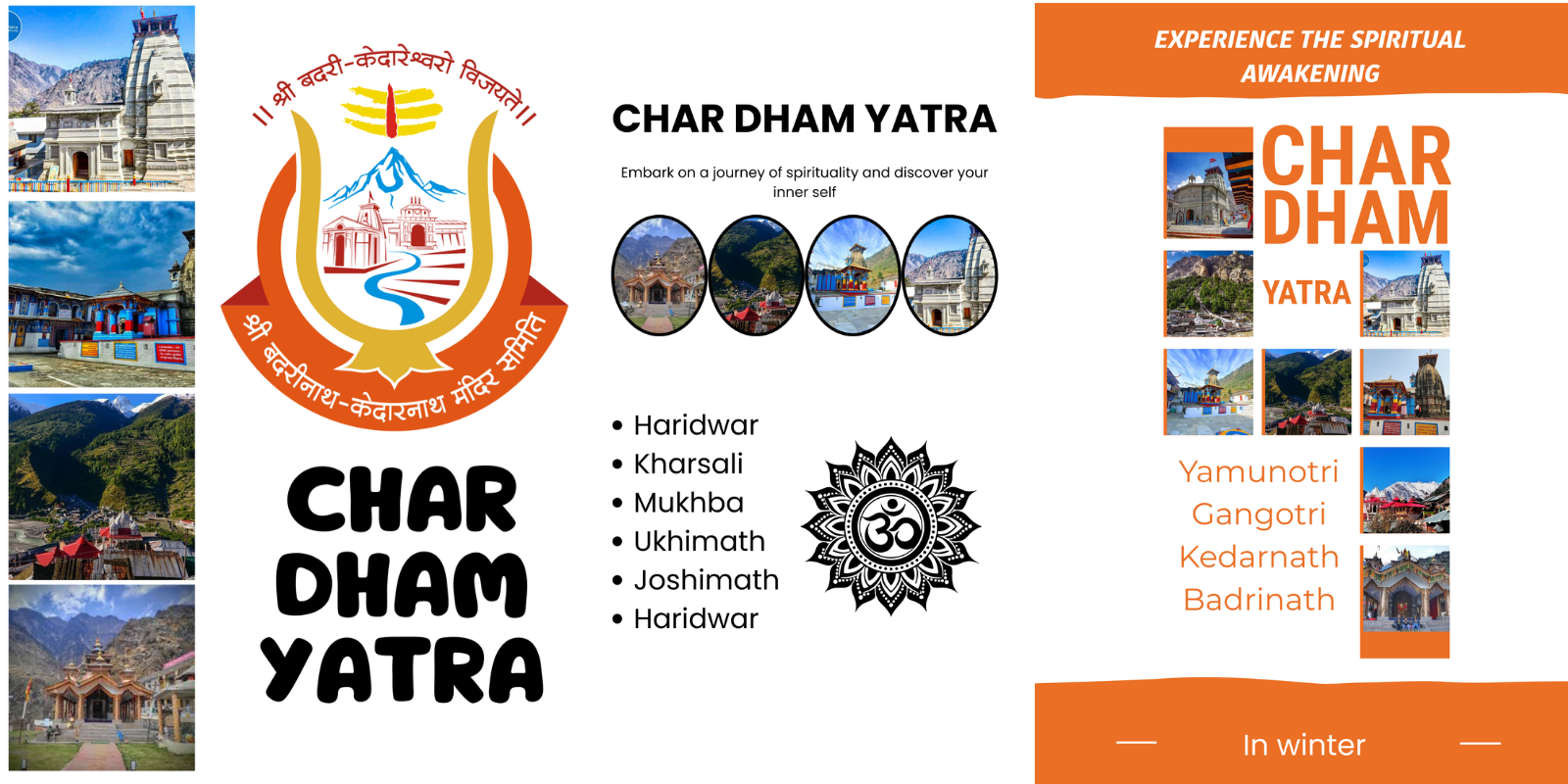
Winter Char Dham Yatra Uttarakhand

Winter Char Dham Yatra Uttarakhand

There is no difference between the winter char dham yatra and the summer char dham yatra; the only difference is the place of worship- Jagatguru Shankarachaya- Jyotishpeeth.

The Winter Char Dham Yatra involves visiting the winter abodes (or ‘winter seats’) of the main Char Dham deities (Yamunotri, Gangotri, Kedarnath, Badrinath) in Uttarakhand, as the high-altitude shrines close due to snow from late November to April. 

Pilgrims visit Kharsali (Yamuna), Mukhba/Harshil (Ganga), Ukhimath (Kedarnath), and Joshimath/Pandukeshwar (Badrinath) for darshan. The best part of the winter char dham yatra is that you get less crowded, so you can have darshan, enjoy snow-capped Himalayan views, and cultural experiences.

Why Go in Winter?

Going for the char dham yatra during winter offers a quieter, safer, and visually spectacular spiritual journey, connecting with the deities in their traditional winter retreats when the high mountains are blanketed in snow.

About Char Dham Yatra in Winters

Traditionally, the devotees start in May and end in October/November with the onset of winter. During the winter, as the high altitudes receive heavy snowfall, they become inaccessible. The idols and symbols Dolies are then moved to nearby Temples, which remain open during the winter.

The Spiritual Significance: Why Travel in Winter?

While the summer Yatra is about the grandeur of the high peaks, the Winter Yatra is about Bhakti (devotion) and Ekant (solitude).

  • The Descent of the Doli: Each year, the Utsav Murti (ceremonial idol) of the deities is carried down in a vibrant palanquin (Doli) accompanied by local drums (Dhol-Damau) and chanting.
  • Direct Access to the Rawals: Unlike the summer rush, you can often interact with the Rawals (head priests of Badrinath ji) at these winter seats and hear stories of the land that aren’t in guidebooks.

Winter Destination of Char Dhams

1. Kharsali: The Sacred Warmth of Yamuna Maiyya

Local Insight: Locally known as ‘Khushimath’—the Village of Joy. 

When it’s freezing cold in the Yamunotri temple, the Goddess resides in Kharsali.

  • Ancient Architecture: The temple here is a marvel of Kath-Kuni style—built with stone and wood using a traditional mortar made of Urad Dal (black gram). It is one of the oldest standing structures in Uttarakhand.
  • The Natural Healer: Kharsali is home to natural thermal springs. In the cold of a Himalayan winter, a dip in these sulfur springs is considered both a physical and spiritual cleansing.

2. Mukhwa: Where the Ganga Flows Through the Deodars

Local Insight: The most picturesque winter seat, sitting near the apple orchards of Harsil.

While the main Gangotri temple is covered in snow, Mukhba (Mukhwa) becomes the center of the world for Ganga devotees.

  • The Two Shrines: You will find two temples here—one made of white marble and a much older, more soulful one crafted entirely from Deodar wood and brass.
  • The Landscape: Mukhwa offers a panoramic view of the Shrikanth and Sumeru peaks. Walking through the deep pine forests here, you realize why the sages chose these “silent valleys” for their penance.

3. Ukhimath: The Winter Soul of Lord Kedarnath

Local Insight: Ukhimath is the spiritual capital of the Kedarnath Valley.

When the gates of Baba Kedar close, the doli of baba kedar moves to the Omkareshwar Temple at Ukhimath.

  • The Vibe: It is tranquil and deeply meditative. Winter darshan of Baba Kedar is really connecting with that divine energy. You can sit in the temple courtyard and gaze at the Kedarnath and Neelkantha peaks—it feels as if the Lord is looking down at His winter home from the heights.
  • Beyond the Temple: This is also the historic site of the wedding of Usha (daughter of Banasura) and Aniruddha (grandson of Lord Krishna). The intricate woodcarvings here tell tales of a time when gods and humans walked together.

4. Pandukeshwar: The Gateway of the Pandavas

Local Insight: This is where the ‘Yoga’ of Badrinath begins.

Located midway between Joshimath and Badrinath, Pandukeshwar is home to the Yogadhayan Badri.

  • The Legend: It is said that King Pandu meditated here to cleanse himself. In winter, the Udhava idol (the emissary of Lord Vishnu) is brought here.
  • The Spiritual Experience: Visiting the two ancient stone temples here is like stepping back into the Mahabharata era (Dwapara Yug). The air is thick with the scent of pine and the sound of the Alaknanda River, making it a perfect spot for Dhyana (meditation).

Guide for the Winter Pilgrim

When to Visit?

The winter Char Dham yatra starts immediately after the main temples close (usually around Bhai Dooj in late Oct/Nov) and continues until Akshaya Tritiya (April/May).

What to Pack

  • Heavy Woolens: Temperatures can drop to -5°C.
  • Local Fuel: Carry local honey or Gahat dal (horse gram) soups to keep your body warm from the inside.
  • Spiritual Readiness: Carry a simple Asana (mat) to sit and meditate in these quiet temples.

The Winter Char Dham Circuit at a Glance

Deity

Winter Abode

District

Key Spiritual Highlight

Lord Shiva

Ukhimath

Rudraprayag

The Omkareshwar Temple & Peak Views

Lord Vishnu

Pandukeshwar

Chamoli

Ancient Pandava Connection

Goddess Yamuna

Kharsali

Uttarkashi

Ancient Stone & Lentil-Mortar Temple

Goddess Ganga

Mukhwa

Uttarkashi

Brass & Deodar Temple near Harsil

The 10-Day Winter Plan

Day 1: The Gateway – Rishikesh to Barkot

  • The Route: Start from the Yoga Capital, Rishikesh. We drive through the winding. roads of Mussoorie, passing the misty Kempty Falls.
  • Pahari Insight: Stop at a local dhaba for Mandua ki Roti (Finger Millet bread). It keeps the body warm for the higher altitudes ahead.
  • Stay: Barkot (1,352m). The air starts to bite here—keep your woolens ready.

Day 2: The First Blessing – Kharsali ( Winter Yamunotri Temple)

  • The Sacred Visit: A short drive to Janki Chatti and then a peaceful walk to Kharsali. This is “Khushimath.”
  • The Ritual: Offer your prayers to Yamuna Maiyya. Don’t forget to see the ancient Shani Temple here—it’s made of stone and wood and has stood for centuries.
  • Stay: Return to Barkot for a warm night’s sleep.

Day 3: Journey to the Bhagirathi Valley – Barkot to Uttarkashi

  • The Drive: We move towards the spiritual heart of the Garhwal, Uttarkashi.
  • Evening: Visit the Kashi Vishwanath Temple. The massive brass Trishul (trident) here is a sight to behold. Locals believe it protects the entire valley.
  • Stay: Uttarkashi.

Day 4: The White Silence – Mukhba (Winter Gangotri Temple)

  • The Destination: Drive to the beautiful Harsil Valley (India’s mini-Switzerland) and then to the village of Mukhba.
  • Spiritual Touch: You’ll find the Goddess Ganga in a temple made of Deodar wood. The village is often covered in a thin blanket of snow—it’s pure magic.
  • Stay: Return to Uttarkashi.

Day 5: Crossing the Mountains – Uttarkashi to Guptkashi

  • The Long Road: Today is a long drive via the Tehri Dam (the biggest dam in Asia)
  • Insight: As you reach Guptkashi, the view of Chaukhamba Peak at sunset is something you won’t findsomewhere else.
  • Stay: Guptkashi/Rampur.

Day 6: The Winter Seat of Kedar – Ukhimath

  • The Sacred Visit: A short drive to Ukhimath, the winter home of Lord Kedarnath.
  • The Ritual: Visit the Omkareshwar Temple. This is where the Rawals (head priests of Badrinath ji) stay. If you’re lucky, you can hear them chanting—the sound echoes through the valley like a divine heartbeat.
  • Stay: Guptkashi.

Day 7: The Hidden Gem – Triyuginarayan & Chopta

  • The Legend: Visit Triyuginarayan Temple, where Lord Shiva and Mata Parvati got married. The sacred fire (Akhand Dhuni) has been burning here for three Yugas!
  • Adventure: If the snow allows, we pass through Chopta. In winter, it’s a white paradise.
  • Stay: Pipalkoti/Joshimath.

Day 8: The Abode of Vishnu – Pandukeshwar & Joshimath

  • The Visit: start your journey to Pandukeshwar, the winter seat of Lord Badrinath.
  • Spiritual Insight: Pray at the Yogadhayan Badri temple. Later, visit the Narsingh Temple in Joshimath—the idol’s arm is said to be thinning every year, a prophecy of the coming times.
  • Stay: Joshimath.

Day 9: The Return Journey Begins – Joshimath to Rudraprayag

  • The Confluence: Drive down to Rudraprayag, where the Alaknanda and Mandakini rivers meet.
  • Pahari Insight: This is the perfect place to buy local Pahadi Topis or Aipan (traditional folk art) as souvenirs.
  • Stay: Rudraprayag.

Day 10: The Sacred Descent – Rudraprayag to Haridwar/Rishikesh

  • The Final Leg: We drive back to the plains, passing through Devprayag, the birthplace of the Holy Ganga.
  • Conclusion: Reach Haridwar by evening for the Ganga Aarti. Your soul is now full of the mountains.
Phone icon
Contact us
WhatsApp icon